a blog by Margaret Bendet

Category: California

Are You Ready to Go?

An old friend took me out for a lovely lunch yesterday. He is a long-time friend, but the adjective “old” suits him well. Roy is ninety-eight. I asked him if he is looking forward to being a hundred, and he said, “Not at all!” Then he said, “I’m ready to go.”

This is a fine line to walk, and I find that I and a number of my friends are now balancing on it with as much care as we can muster. It is obviously a great privilege to live to be old, to be elderly. For one thing, it brings a sort of inner support that some might call wisdom.

Roy says that every night when he closes his eyes for sleep, a voice inside asks him, “What did you offer today?” And then he hears, “What did you receive?”

Being able to give and receive is, it seems to me, the heart of being human.

Roy’s voice also asks him, “Are you ready to go?”

This, too, is the essence of being human. We are here on borrowed time. As my guru once said, “This is not your life to live as you wish. It’s what you are choosing to do with God’s time.”

Of course, one of the greatest challenges of getting older is the loss of our powers. Abilities that we once took for granted—hearing, seeing, walking, balancing, standing erect, having energy—begin to diminish and even to disappear.

And, too, we lose the company of our loved ones. The first time I went to see my mother after my father’s funeral, she had a huge bowl of M&M’s set out on the coffee table—a little crutch to help her through her days.

Roy lost his beloved wife of sixty-eight years just a couple of months ago. “Joanne was everything to me,” he said yesterday. “She was my companion, my social life…”

“It’s like losing a limb,” I told him—though I have to admit that the heart losses I’ve sustained have never been as deep into my vitals as Joanne was into Roy’s.

Before Roy and I went to lunch, I had a few minutes to look around his apartment. I was thrilled to find that two of my own creative offerings were on display there—a soul collage I’d made for Roy’s ninety-seventh birthday was stuck to his refrigerator door with a magnet, and a pair of shells I had created into an image of Joanne and Roy some twenty years earlier was sitting on a prominent shelf in his living room.

Seeing these creations of mine being held with care in a friend’s life made me feel loved. I had given them as expressions of my love, and they had been received in that same spirit. Discovering this was, I found, unutterably satisfying.

I can say that I feel these are the most important actions we take in life—giving and receiving love.

What did you offer today?

What did you receive?

There really isn’t much else that matters.
 

Warmth and Love

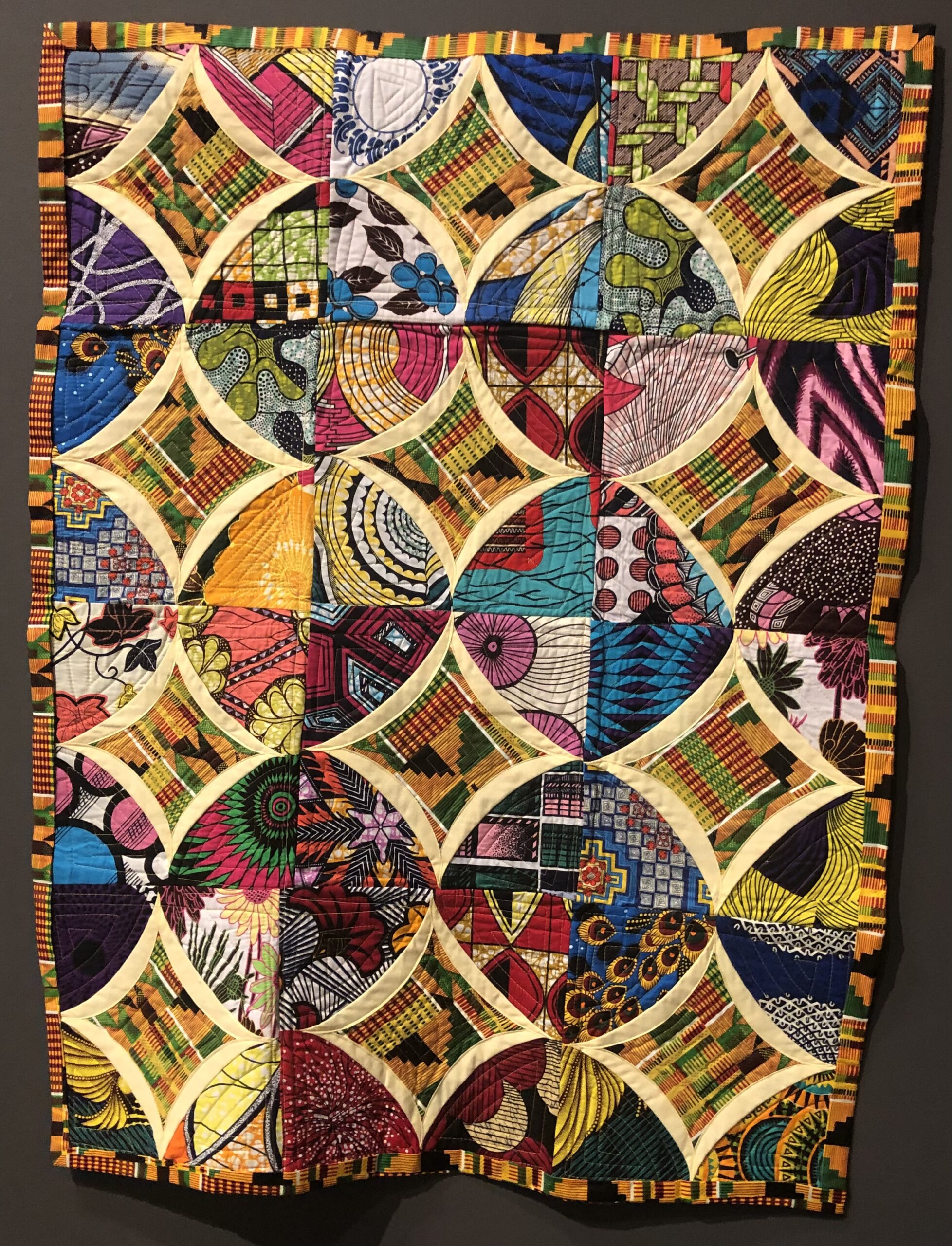
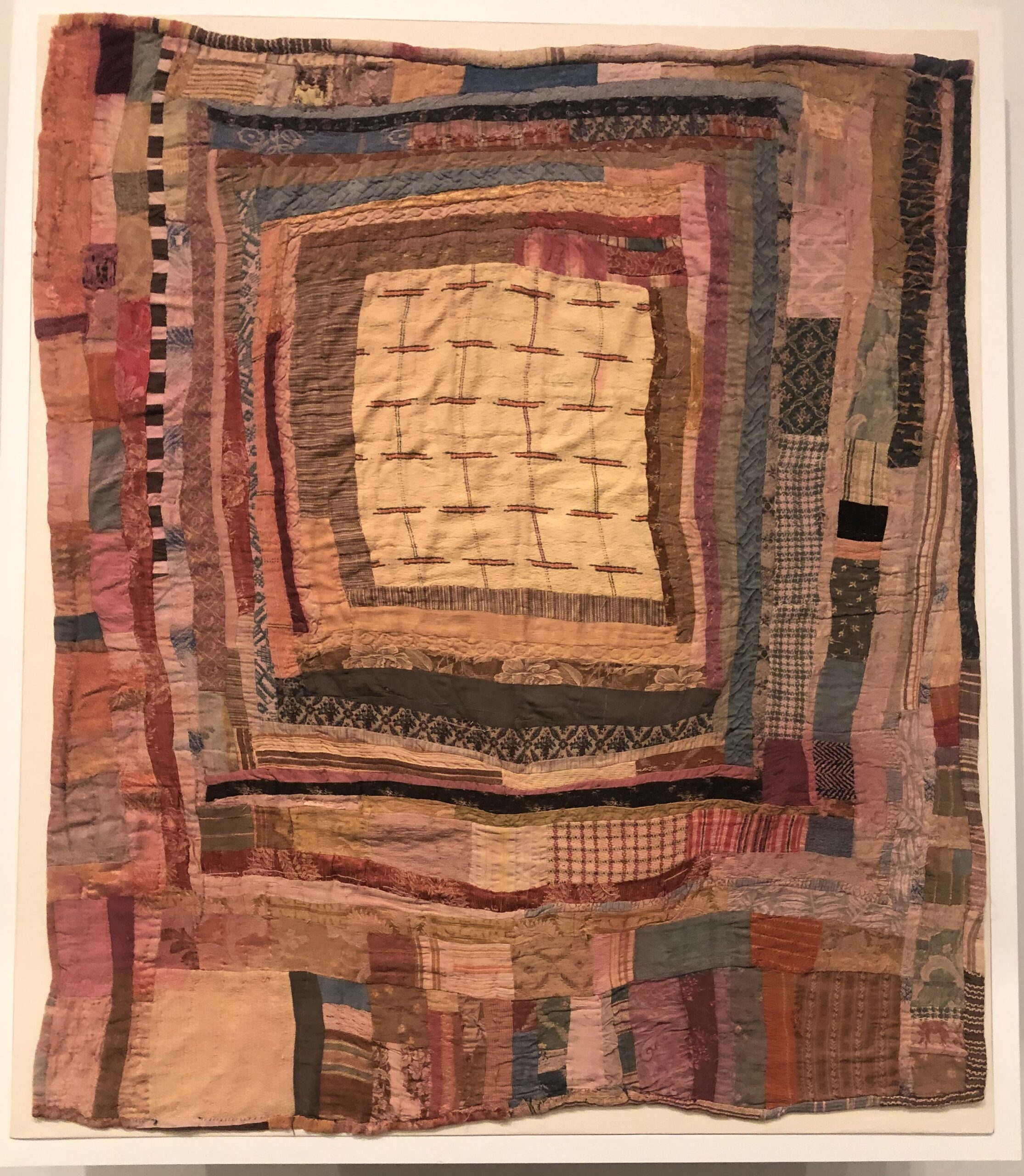
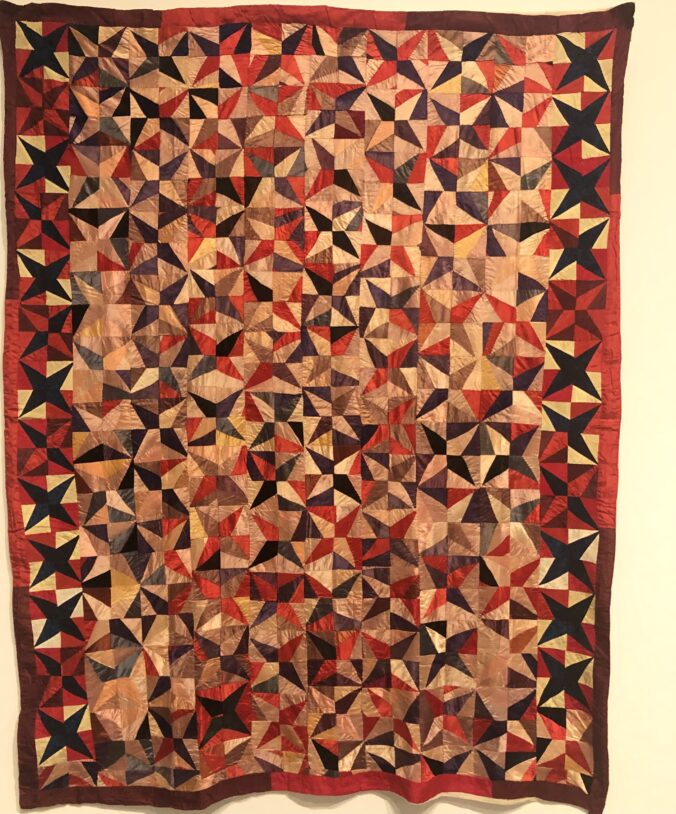
One of the sweetest things about being in an urban setting is that I have greater access to museums and art exhibits than I did when I lived on a remote island. Recently, a new friend invited me to join him to see an exhibit of African American quilts at the Berkeley Art Museum, which is just a few miles from where we both live. The images of the quilts have stayed with me, I think, for several reasons.

First, this is what I think of as “everyday art”—art that people create and use as a part of their lives. These quilts were made from materials that people had on hand—mainly, scraps of fabric from their family’s clothing—and the finished artwork wasn’t to be framed or hung on a wall; it was given to loved ones; it went on their beds; it kept them warm at night.

One of the quilts I remember most clearly was supremely simple. It was made entirely from blue denim work clothes. Is this art? I would say so. That blue denim quilt moved me deeply. It was a graphic expression of a person’s life. I didn’t photograph that one, but I think I will never forget it.

I was also moved by the explanation of her quilting that came from Laverne Brackens, who said:

“In my family at first quiltmaking meant warmth and love. You know these cold nights you put a quilt on and you be so warm and you have a feeling that the person who made that quilt loves you. And when they make one so beautiful that you don’t want to turn loose from it, that is precious. I have fifty-six children, grandchildren, great grandchildren, and great great grandchildren, and I made everyone a quilt.”

Ms. Brackens is ninety-seven years old; in 2011 she received a National Foundation for the Arts Heritage Fellow Award for lifetime contributions to the art of quilting.

There were eighty artists whose work was represented in the museum exhibit, and the open and improvisational style of most of these quilters radiated through their artwork.

“I feel a little uncomfortable about this exhibit,” my friend said after we’d looked at a number of the quilts. “It’s like looking at Native American art in a big Western museum. It’s as if the art was appropriated for the benefit of another culture—the dominant culture. Notice that these quilts are being displayed in a way that’s different from the way they were once used.”

I thought about that for a few minutes, and then I decided to disagree. I like the fact that a museum is recognizing the beauty and value of this home-grown, home-used, home-needed art form. I like the fact that the artists are being given recognition and that their words—their own descriptions of their art—are being mounted on the wall along with their quilts.

I like art exhibits that inspire ordinary people to create art in their own lives—art for warmth and for love.

The Berkeley Art Museum and Pacific Film Archive’s exhibit—Routed West: Twentieth Century African American Quilts in Californiawill be open through November 30, 2025.

© 2026 Re-Entry

Theme by Anders NorenUp ↑