a blog by Margaret Bendet

Category: Oakland

A Medical Saga

One night two and a half weeks ago I took a spill—a bad spill!—on the sidewalks of Oakland. I was asked if I wanted an ambulance, but I was nervous about my new medical insurance, and I knew that ambulances can be quite pricy: $1,000 or $2000, easily. So, I looked at my discombobulated right wrist and said, “Maybe it’ll feel better in the morning!” The thing about broken bones, however, is that they do not heal overnight.

The next morning my housemate dropped me off at the Kaiser Permanente emergency facility in Oakland, and I had an upfront and personal experience of my new medical insurance. In my considered opinion, Kaiser is great insurance! My first smile of the day was when the nurse at reception told me, “I see some X-rays in your future.” (I think humor is always helpful.) But I received my first sign of just how first-rate Kaiser is when an aide called my name in the waiting room and noticed me waiver as I stood up. Immediately, she asked me, “Do you need a wheelchair?”

“I would be so grateful,” I said.

“Sit down while I get it,” she said. “I’ll be right back.” And she was.

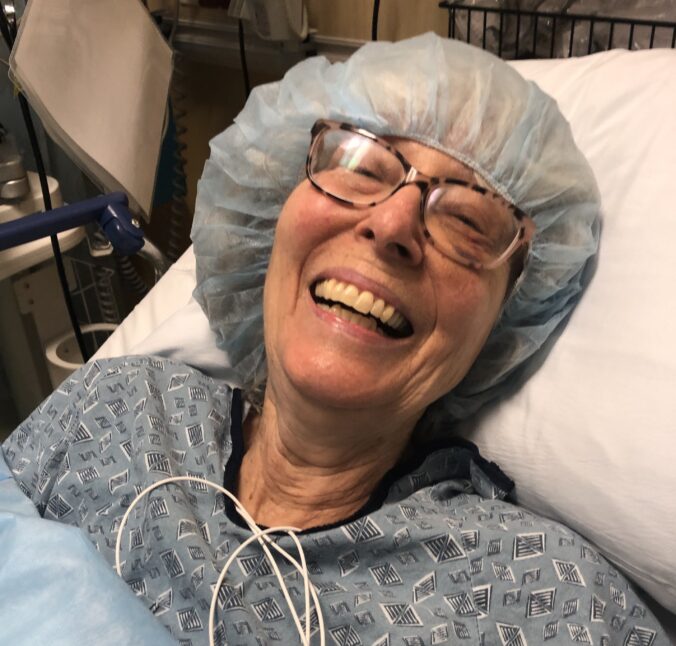
I was in the emergency facility for five hours. I had a total of seven X-rays on my right wrist and knee, a C-T scan on my brain (because I’d hit my head the night before and clearly had the beginnings of a black eye) and another C-T scan on my wrist just to verify what they’d seen before. I saw several nurses and medical technicians, two or three doctors, and a surgeon weighed in as well. My arm was put into a Fiberglas cast and a sling, and my right leg was put into a brace so I won’t bend the broken kneecap, and it can, hopefully, heal on its own.

Everyone I met was superb—so competent and clear and upbeat!

Because I have the right insurance, the whole thing cost me $225. With the wrong insurance, I figure that it could have run into thousands. (With many insurances, just a C-T scan costs the patient $300 to $800. I had two of these scans.)

The surgery on my wrist was a week later. The same excellent care at about the same cost.

One of the reasons, this experience is so gripping for me is that my coverage by Kaiser had begun only a week before I took that fall. One week! For the month before that, I’d had what I described to friends as “the insurance from hell.” I won’t name that earlier insurance company, but I will tell you a little bit about my experience with them.

I was signed up over the phone by a certified insurance agent. I’d just moved to Oakland, and the medical insurance I’d had in Washington wasn’t going to work in California. Because of the move and my age, I was no longer going to be able to get the kind of insurance where you pick your own doctor. I needed an HMO. I’d had a bad experience with Kaiser in Hawaii some sixty years before, so I told this agent, “Anyone but Kaiser!” The agent never questioned that. He spoke with me for a few minutes and suggested this other insurance company. With what was obviously insufficient information and thought, I signed on. The young man I was speaking with assigned me to a doctor in their system, and within a week I had received in the mail a plastic card with my name and the doctor’s name on it.

The first problem came when I tried to make an appointment to see that doctor. No one at the company’s local facility had ever heard of her. I went online and found out that she has an active medical practice in Minnesota.

I called the insurance company and pointed out that this would be too far from me to travel for an appointment. The man I spoke with that time said, “There is one doctor you can see in Oakland.” He gave me the doctor’s name, and while the agent was ordering me a new card, I looked this doctor up online.

He had three reviews. One said, “He is great doctor!” The next said, “This office is filthy.” The third said, “I am a healthcare professional, and I have never seen a more poorly managed medical practice.”

When the agent got back to the phone, I told him that I would not consult this doctor under any circumstances. At that point the agent said that I could see a doctor in Berkeley. We found a doctor who looked fine online, and shortly, I received a new card with the new doctor’s name on it. I then spent two weeks trying to get authorization to make an appointment to see this new doctor. I was unsuccessful.

This particular medical group has a practice of not allowing new members to make direct calls to medical offices. I had to leave a message and ask that the office call me back at their convenience. They always seem to call in the middle of a hatha yoga class or when I was on Zoom with a client…

One morning in meditation, I realized that this medical insurance had been a huge mistake and that I still had time to sign up for another insurance for 2026—and, in fact, for December 2025. I realized, too, that everyone I currently know who has Kaiser Permanente loves it, and that I needed to rise above my experience from sixty years ago. I am so grateful that I did.

PS I found out later that Kaiser would have covered the ambulance.
Warmth and Love

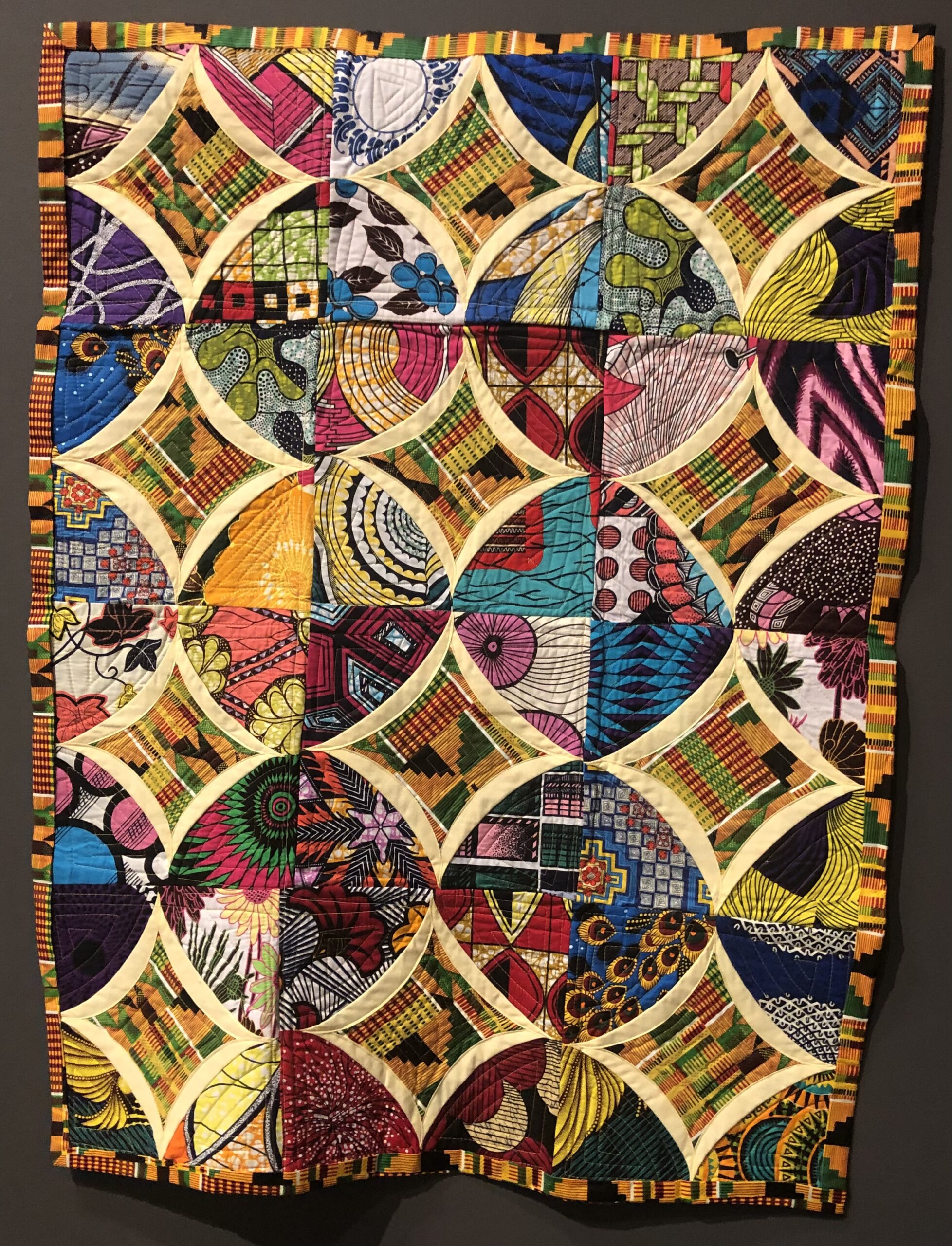
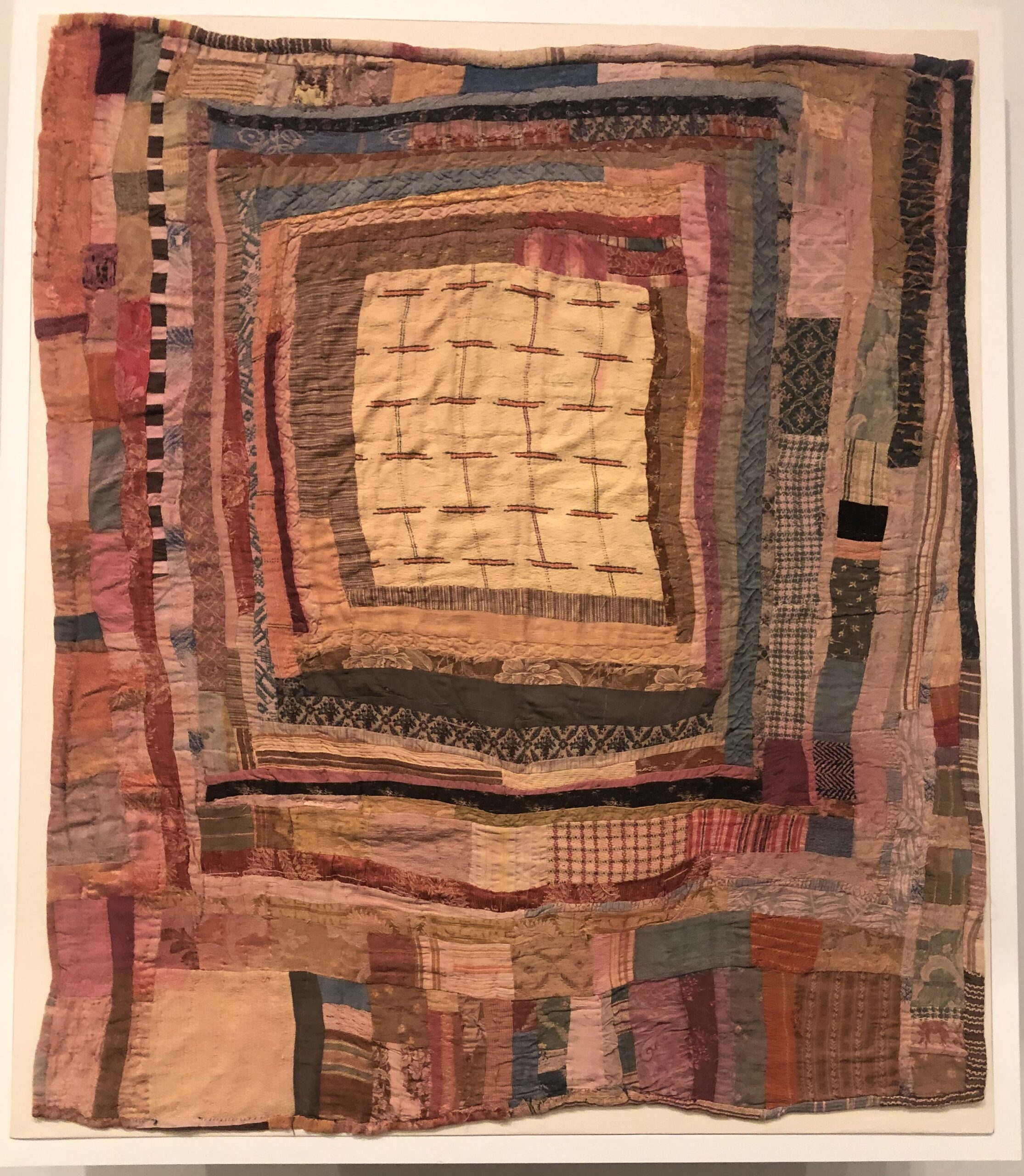
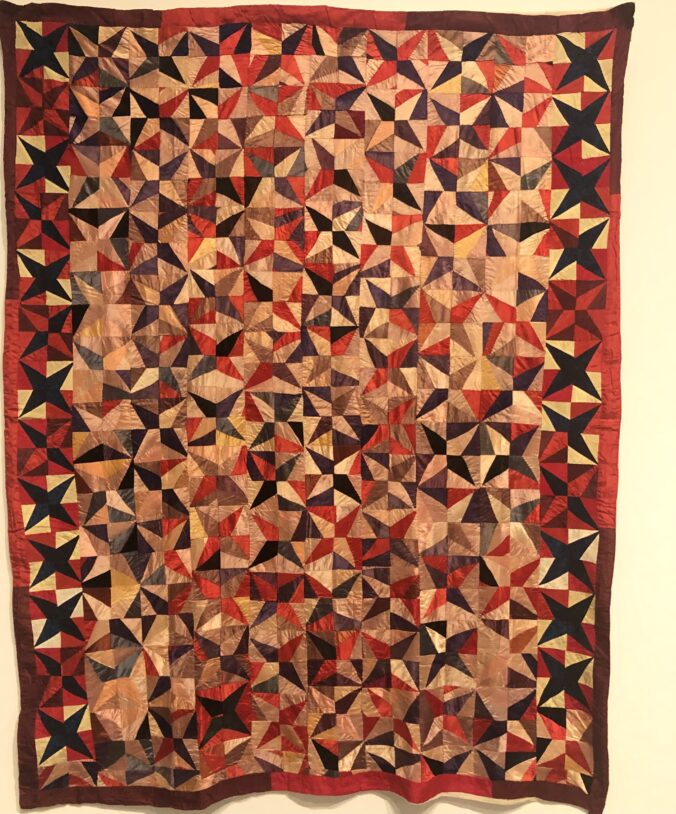
One of the sweetest things about being in an urban setting is that I have greater access to museums and art exhibits than I did when I lived on a remote island. Recently, a new friend invited me to join him to see an exhibit of African American quilts at the Berkeley Art Museum, which is just a few miles from where we both live. The images of the quilts have stayed with me, I think, for several reasons.

First, this is what I think of as “everyday art”—art that people create and use as a part of their lives. These quilts were made from materials that people had on hand—mainly, scraps of fabric from their family’s clothing—and the finished artwork wasn’t to be framed or hung on a wall; it was given to loved ones; it went on their beds; it kept them warm at night.

One of the quilts I remember most clearly was supremely simple. It was made entirely from blue denim work clothes. Is this art? I would say so. That blue denim quilt moved me deeply. It was a graphic expression of a person’s life. I didn’t photograph that one, but I think I will never forget it.

I was also moved by the explanation of her quilting that came from Laverne Brackens, who said:

“In my family at first quiltmaking meant warmth and love. You know these cold nights you put a quilt on and you be so warm and you have a feeling that the person who made that quilt loves you. And when they make one so beautiful that you don’t want to turn loose from it, that is precious. I have fifty-six children, grandchildren, great grandchildren, and great great grandchildren, and I made everyone a quilt.”

Ms. Brackens is ninety-seven years old; in 2011 she received a National Foundation for the Arts Heritage Fellow Award for lifetime contributions to the art of quilting.

There were eighty artists whose work was represented in the museum exhibit, and the open and improvisational style of most of these quilters radiated through their artwork.

“I feel a little uncomfortable about this exhibit,” my friend said after we’d looked at a number of the quilts. “It’s like looking at Native American art in a big Western museum. It’s as if the art was appropriated for the benefit of another culture—the dominant culture. Notice that these quilts are being displayed in a way that’s different from the way they were once used.”

I thought about that for a few minutes, and then I decided to disagree. I like the fact that a museum is recognizing the beauty and value of this home-grown, home-used, home-needed art form. I like the fact that the artists are being given recognition and that their words—their own descriptions of their art—are being mounted on the wall along with their quilts.

I like art exhibits that inspire ordinary people to create art in their own lives—art for warmth and for love.

The Berkeley Art Museum and Pacific Film Archive’s exhibit—Routed West: Twentieth Century African American Quilts in Californiawill be open through November 30, 2025.

Hauled to Safety

Yesterday, I woke up feeling punk—or, anyway, on the edge of punk. I was thinking about having a little heart-to-heart with my inner Light, the one that had instructed me to leave my island paradise in Washington state and to relocate to this city in northern California.

First, let me say that moving from one state to another in the good old US of A is a little like moving to another country. Everything changes. I needed a new driver’s license, a new bank, a new registration for my car, a registration to vote, a registration to operate my little editing company… I needed a new hair stylist, a new grocery store, and new doctors of every persuasion… All of my various insurances have come under scrutiny. Even when the company itself didn’t have to change, the terms of the policy were different, and the price went up—and all because of a potential hike in the rent where I was living.

So, on this “punk” morning, I went into meditation—and in that quiet and sparkling state of mind, I understood that I had seen this move coming many years ago. It’s the nature of life on a beautiful island—everyone wants to live there and, after a while, the cost of being on the island goes way up. And I also understood that costs are going up not just for me but for everyone. Right now, this is the human experience on our planet, which is populated by so very many people. I don’t want to say “too many people” because how would we ever decide who the extras are! We are all here; we are all involved in this universal dilemma.

Once my mood had improved, I saw that one of the great advantages of moving to this place where I was sent is that I have been plunked down in the middle of a community of people who follow the same teacher, adhere to the same spiritual practices, and honor the same teachings as myself. In our tradition, “satsang” is a word that means “in the company of the Truth.” A satsang is a gathering of like-minded people to explore elevated teachings, to recite a scriptural text, or to chant one of the many names of God. In the six weeks I’ve been in Oakland, California, I have to say that I’ve had more satsang on any given day than I would usually have had in a month on Whidbey Island. Now, when I go to sleep at night, I’m often reliving some story I’ve heard—some wonderful aspect of my spiritual path.

Let me share one of the stories I’ve heard since moving to Oakland.

A woman who was visiting from Maine, a photographer, spoke about being in our guru’s ashram in India at some point shortly after she began on this path. It was a holiday, and someone volunteered to loan her a sari so that she would be appropriately dressed. A sari is about a six-yard length of fabric, the width determined primarily by the wearer’s height. The woman who loaned the sari was about six-foot-two, and she herself is about five-foot-two. “Usually when I tuck in the fabric around the waist, it’s a few inches of overhang,” the woman said, “but with this sari, the tuck came down to my knees.” So, wrapped in a humungous amount of fabric, this woman scaled a wall to get to the vantage point she wanted for her photo—perched on a little ledge just above the entrance to a shrine. She’d gotten into this spot, was hanging on with one hand, and then some wires that she touched with her other hand came right out of the wall beside her. What to do!

Still hanging on with one hand, she looked up, and there, standing on the roof above her head was our guru. The guru smiled, reached her hand down, plucked this woman off of her precipice, and hauled her onto the safety of the roof. The guru then smiled at her again —and turned and walked inside.

It was such a strong story. I could feel it in my own body. When I went to bed that night, I experienced the sensation of being hauled to safety by the sure hand of the guru.

Hearing this story, holding it in my bones, is reason enough for me to be in Oakland.

Getting Settled

I feel as if I’ve been pedaling hard lately—packing up my life, moving from an apartment in a forested Washington-state oasis to a room in a vintage Victorian in a California city. It’s quite different here—though I knew it would be. “Here I am, in my golden years, transplanting myself to a city,” I said to someone recently.

This man had a ready answer. “There are good reasons for living in a city,” he said. “Better medical care, you’re closer to it, and you have a community around you—people who can offer you help.”

That is compelling, I must admit. I haven’t gotten into helping my neighbors yet. I’ve been busy settling in. But I can see that it’s possible, it’s necessary, it’s a really good thing to do, and it’s an excellent reason for being here.

One of the most striking benefits of being in an urban environment is the spectacular variety of people who are here. The thing about South Whidbey Island, where I was living, is that almost everyone is white, almost everyone is old, and—really—most people are female. It is an extraordinarily uniform world. Here in Oakland, walking down any street, in the space of just a few minutes I can hear different languages, see people of all different sorts of nationalities and races, and encounter lots and lots of children.

There is something so refreshing about sharing space with young people. The other day, I was hauling my computer and my big purse with all my IDs several blocks because I had been told—erroneously—that the local Post Office would be able to help me register a photo of my driver’s license with the ID.me website. It was hot, I was getting tired, and when I saw a toddler—maybe three years old—showing her own irritation with her stroller by standing in front of it and crying, I felt emboldened to step in.

“Oh,” I said to her, “so you get to sit in a throne on wheels.” The little girl stopped crying and looked at me; her mother laughed. “She doesn’t want to leave the park,” her mom explained.

“I know how that feels,” I said. “Sometimes I just want to cry, myself.” Her mom and I smiled at each other, and I kept on walking. But I noticed that this lovely, perfectly dressed child had cornrows all over her head, and I wondered just how long it had taken her mother to accomplish all of that. It made me feel quite a bit less critical of my own life.

The woman behind the counter at the Post Office was incredulous when I outlined for her what I’d been told that she would do for me. “Who told you I would do that?” she said.  I told her it was a man at the 1-800 number for Social Security, and then I had to admit, “…But it didn’t make much sense to me that you could.” We both started laughing. I packed up my computer and my IDs and trudged home again—and figured it out on my own.

Let me italicize this: I figured it out on my own. I got myself registered online with ID.me, got verified in a video meeting with a young man who was pleased that I was so pleased, and then arranged online to have my Social Security checks direct deposited to a new bank—a bank that’s walking distance from where I’m now living. Success! It was so satisfying!

And then I found my way to Costco, where I bought some fresh Coho salmon and enough toilet paper to last me for a long, long, time,

All of this, and I’m living in a community that is like family to me. Let me illustrate this by recounting a conversation I had with my new next-door neighbor, Aline. She was telling me that she married for the third time a few years ago. Her husband had wanted the wedding to be small, just family. “But my family wouldn’t have been able to come from Canada,” Aline told me. “So, I wanted to ask the people of this community. They’re my family now.”

Her husband asked her who she wanted to invite. “Everyone,” she said. “How could I invite just a few people. That would leave people out… and how can you leave out family!”

I don’t have a good way to end this—except to say that wouldn’t it be nice if we felt that way universally. In the meantime, let’s take care of anyone we think of as family.


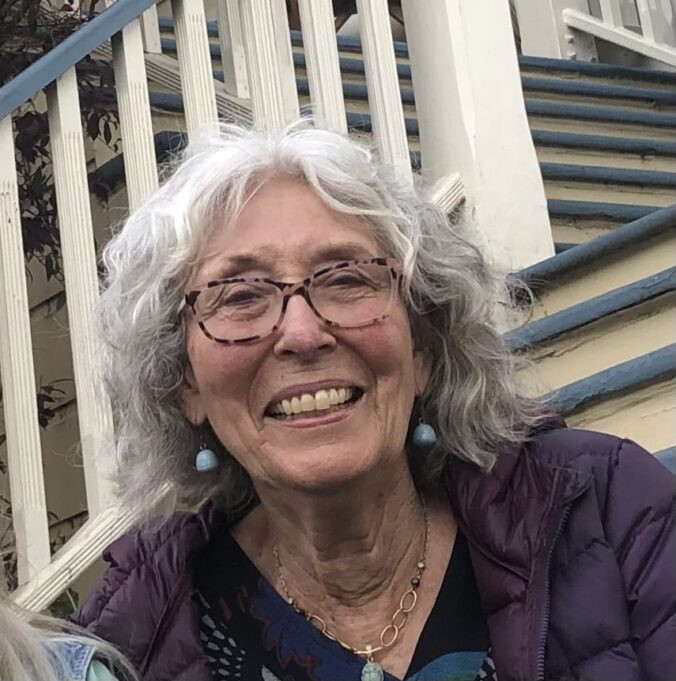
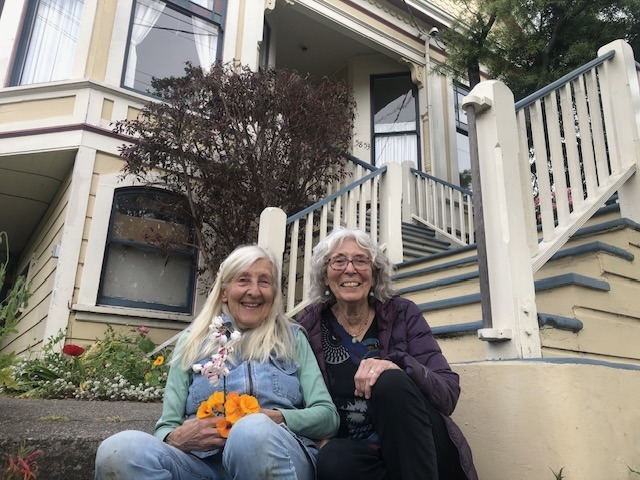
Here I am with Judy Merrill on the steps of her lovely Oakland house where I am renting a room.


© 2026 Re-Entry

Theme by Anders NorenUp ↑